Stop 05 · Tailoring Fit Notes
Dress Shirt Collars: Measuring Your Neck the Right Way
A collar that fits at 9 a.m. should still fit at 3 p.m., and getting there takes a soft tape, half an inch of arithmetic, and one finger.
By Julian Okafor, Tailoring Editor
· 7 min read · 1,395 words
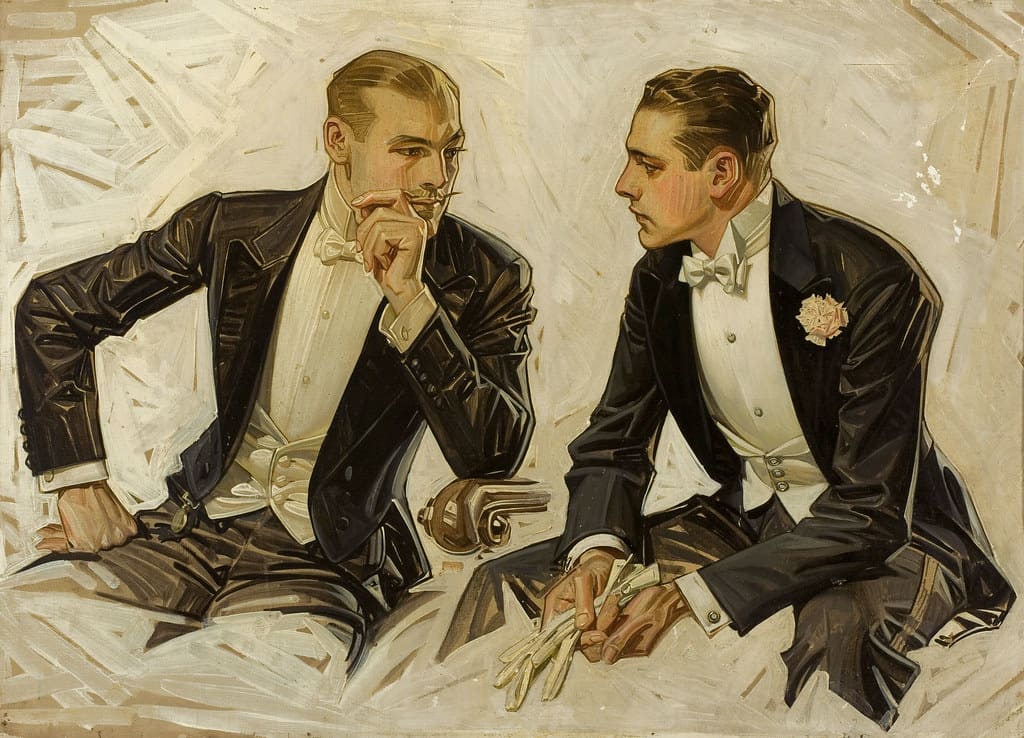
By three in the afternoon the top button has become a small, polite hand around your throat. You loosen your tie an inch, then another, and by the last meeting of the day the knot is somewhere near your sternum and the collar points are wandering. The shirt fit fine at 9 a.m. It doesn’t now, and it was never going to, because nobody ever showed you how to measure neck size properly.
To measure neck size, wrap a soft tape snugly around the base of your neck, just below the Adam’s apple where a shirt collar actually sits, then add half an inch and round to the nearest half size. That’s your collar size. A good fit lets one finger slide flat between the buttoned collar and your neck.
The rest of this piece is about why each of those steps matters, and what to do when you’ve already bought a drawer full of shirts that fail them.
The number on the label is a measurement of the shirt
Shirt collar sizes, the 15 1/2 in “15 1/2 x 33,” are measured on the shirt, not on you. Lay a collar flat and unbuttoned, and the size is the distance from the center of the top button to the far end of the buttonhole. Shirtmakers expect a little ease between that number and your neck, which is why the half inch matters. If your neck is 15 inches around, a 15-inch collar will close, and you’ll be uncomfortable in it within an hour.
The second number is sleeve length, measured from the center of the back of your neck, over the shoulder, to the wrist bone. It’s less critical than the collar because a cuff can be moved, but it matters under a jacket. You want 1/4 to 1/2 inch of shirt cuff showing below the jacket sleeve, the same number I give everyone when we’re fitting a jacket from the shoulder down, and a shirt sleeve that’s an inch short will hide behind the jacket every time you reach for something.
I wore the wrong collar for most of my twenties. My first good shirts were 16s, because a department-store clerk had measured me over a crewneck sweater, and I didn’t think to question it. I spent five years with a collar that gapped like an open mailbox under every tie. Measure yourself.
How to measure neck size in two minutes
You need a soft cloth tape and a mirror. A friend helps but isn’t required.
- Take off any shirt with a collar. A thin T-shirt is fine.
- Find where a collar sits: the base of your neck, about an inch above the collarbone, just below the Adam’s apple.
- Wrap the tape around snugly but flat, without pulling it into the skin, and keep it level all the way around.
- Read the number, add half an inch, and round to the nearest half size.
That’s the whole method. The common mistake is measuring too high, up around the middle of the neck where it’s thinner, which gives a number a quarter or half inch too small. The other common mistake is measuring with two fingers tucked under the tape, which adds roughly the right ease, but inconsistently, because fingers vary.
| Snug neck measurement | Collar size to buy |
|---|---|
| 14 to 14 1/4 inches | 14 1/2 |
| 14 1/2 to 14 3/4 inches | 15 |
| 15 to 15 1/4 inches | 15 1/2 |
| 15 1/2 to 15 3/4 inches | 16 |
| 16 to 16 1/4 inches | 16 1/2 |
| 16 1/2 to 16 3/4 inches | 17 |
If you already own a shirt whose collar you like, measure that instead. Lay it on a table, unbutton the collar, flatten it, and measure from the center of the button to the far end of the buttonhole. It’s often more reliable than measuring yourself, because it’s a collar you’ve already tested for a full day.
One finger, not two
The test most men learn for collar fit is the two-finger rule: two fingers should slide between collar and neck. I disagree with it, mildly. Two fingers stacked flat is about the loosest a collar can be before it gaps under a tie, so I treat it as the outer limit, not the target. One finger, laid flat, is the fit I aim for on any shirt you’ll wear with a tie. It’s snug enough that the collar stands up and frames the knot, and loose enough that you can swallow, turn your head, and eat lunch.
A collar that fits at 9 a.m. and chokes you by 3 p.m. was too small at 9.
Open-collar shirts are more forgiving. If you never wear a tie, you can size for two fingers and nobody will know. But a collar that’s loose enough for comfort without a tie will look sloppy the day you put one on, so if you wear ties even occasionally, size for the tie.
Collar shape matters too, once the size is right. A spread collar suits a wider knot and a broader face; a point collar suits a slim knot and a narrow one. The proportions between collar, knot, and lapel are their own topic, and tie width and knots lays them out with numbers. My only rule here is that the collar points should be long enough to stay under the jacket lapel, about 2 3/4 to 3 1/4 inches for most men.
When the collar shrinks
Cotton shrinks, and collars shrink most, because the interlining inside them shrinks along with the cloth. A good shirt will lose up to a quarter inch at the collar over its first several washes. A cheap one can lose half an inch. That’s why many shirtmakers cut collars a touch generous, and why a collar that’s perfect out of the package may be tight by the fifth wash.
| Fix | Typical cost | Room gained |
|---|---|---|
| Move the collar button out | $8–$15 | About 1/4 inch |
| Collar extender | $5–$10 a pair | About 1/2 inch |
| Wash cold, hang to dry | Free | Prevents most shrinkage |
| Buy the next size up | Price of a shirt | 1/2 inch |
Moving the button is the fix I’d reach for first. A tailor will move it as close to the collar edge as the band allows, usually a quarter inch, and the change is invisible under a tie. A collar extender is a cheaper stopgap, a little elastic loop that hooks over the button, but the collar then sits slightly crooked, and the fix shows if you take your tie off.
The best fix is prevention. Wash shirts cold, hang them to dry, and iron while damp. The dryer is where most collar shrinkage happens, and a hot dryer can take a quarter inch off a new shirt in one cycle.
What sits under the collar, and around it
Two last details. First, the undershirt. An open collar reveals whatever’s under it, and a crewneck T-shirt showing at the throat of a dress shirt looks like a mistake. If you wear one, choose a V-neck in a thin, close-fitting cotton, and the same logic on fabric weight that applies in choosing a white T-shirt applies here, only lighter.
Second, the jacket. A shirt collar should sit about half an inch above the jacket collar at the back of your neck. If the jacket swallows the shirt collar, either the jacket collar sits too high or the shirt collar is too low, and it’s easier to fix the shirt by choosing a taller band. This matters most when you’re dressed for a specific stake, such as an interview outfit, where the space between your chin and your lapels is what people will be looking at for an hour.
If you’re consistently between sizes, or your neck is large relative to your build, made-to-measure shirts become worth considering, often for $90 to $150 a shirt. Otherwise, the right ready-made size and a $10 button move will cover most men. The rest of our notes on fit sit in the tailoring section.
The verdict: Measure snugly around the base of your neck, add half an inch, round to the nearest half size, and confirm that one finger slides flat inside the buttoned collar. Wash cold and hang dry to keep that fit, and if a collar shrinks, pay a tailor $8 to $15 to move the button before you replace the shirt.
Next stops
All Tailoring guides
The Shoulder Is the One Fit You Can't Fix
Sleeves, waists, and hems are a tailor's daily bread, but a shoulder that is wrong in the store will be wrong for the life of the jacket.
Julian Okafor 8 min
Made-to-Measure vs. Off-the-Rack: Where the Money Goes
A made-to-measure suit buys you a pattern moved to fit your body, and for most men with an average build that's money better left with a good tailor.
Julian Okafor 4 min

What to Wear to a Job Interview in 2026
Dress one step above the room, start with polished shoes and a belt that matches, and you can stop thinking about clothes before you sit down.
Sam Whitaker 6 min