Stop 01 · Footwear Fit Notes
How a Chelsea Boot Should Fit, and the Heel-Slip Myth
A Chelsea has no laces to save a bad fit, so the instep, the heel cup and a quarter inch of lift decide whether you'll wear it or return it.
By Marcus Hale, Footwear Editor
· 7 min read · 1,408 words
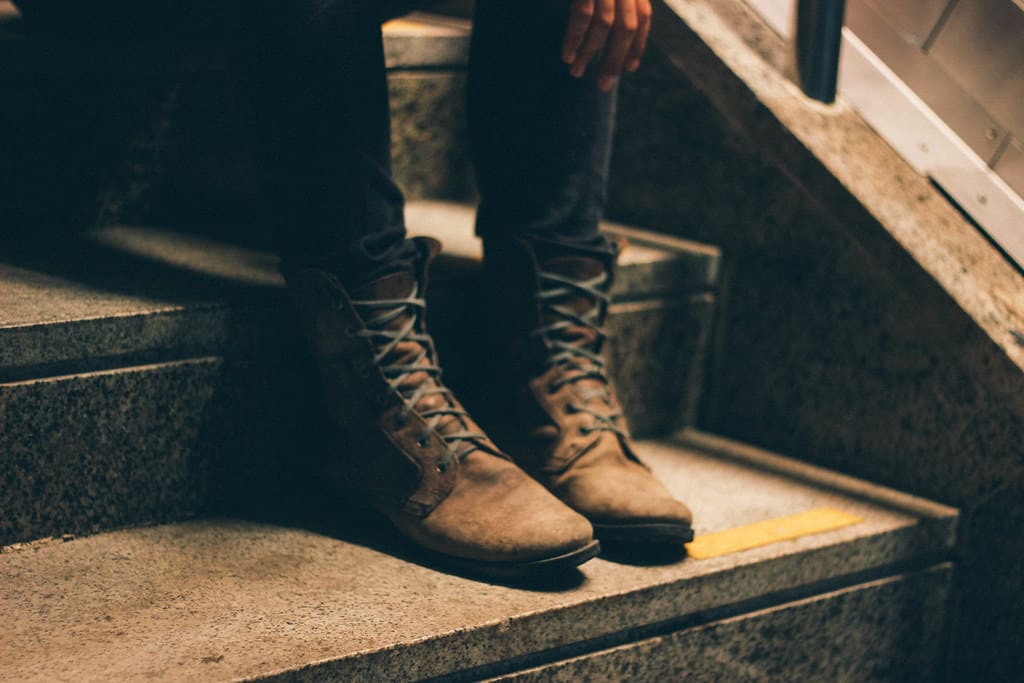
A quarter inch. That’s how far your heel can lift inside a new Chelsea boot before I’d tell you to try another size. Less is better. A little more is survivable for a week or two in stiff leather. Half an inch is a boot that will rub you raw by dinnertime, and no amount of breaking in will fix it.
Customers rarely believed me. They’d heard heel slip was normal for a Chelsea and that it goes away.
So how should Chelsea boots fit? Snug across the instep, with your heel lifting no more than a quarter inch as you walk, about half an inch of room past your longest toe, and the widest part of your foot sitting at the widest part of the boot. The elastic gussets should stretch as you pull the boot on and lie flat once it’s on.
A Chelsea has no laces to hide behind
A lace-up boot carries its own fitting tool on the front. Pull the laces tighter and the instep cinches down, locking your heel into the back of the boot. Loosen them for thick socks. That adjustment covers a lot of sizing sins.
A Chelsea has none of that. It’s leather wrapped around your foot with elastic gussets on each side that let your foot in and then pull the shaft snug around the ankle. The gussets grip your ankle. They do almost nothing for your heel or your instep. What holds your foot in place is the shape of the boot itself: the height of the instep, the width at the ball, and the cup of the heel.
That means a Chelsea has to be right the day you try it on. You can’t lace your way out of a long last or a shallow heel cup. It also means the brand’s last matters more than with almost any other boot, which is why the reasons shoe sizes vary between brands stop being trivia once you’re buying one.
How Chelsea boots should fit, from the toe back
Start at the front. With the boot on and your weight on it, press down just past your longest toe. You want about half an inch, roughly the width of your thumb. Less and your toes hit the end on stairs. More and the boot is too long, and a too-long Chelsea is exactly the boot that slips.
Move to the ball of your foot. The widest part of your foot should sit at the widest part of the boot, where the sole flexes. If your widest point lands in front of the boot’s, the boot is too short for you even if your toes have room. If it lands behind, the boot is too long.
The instep comes next, and it’s the one men ignore. A new Chelsea should feel firm across the top of your foot. Not painful, not numbing, but definitely there. That pressure is what holds your heel down. Leather loosens there more than anywhere else, often by an eighth of an inch in the first month, so a Chelsea that feels comfortable across the instep in the store will feel loose in six weeks.
Then the heel. Walk, don’t stand, and walk on a hard floor for a full minute. Carpet hides slip. Watch and feel the back of the boot as you push off.
| Heel lift in a new boot | What it means | What to do |
|---|---|---|
| Under 1/8 inch | Excellent fit | Buy it |
| 1/8 to 1/4 inch | Normal for stiff leather | Buy it; expect it to settle |
| 1/4 to 3/8 inch | Borderline | Try a half size down or a thin insole |
| Over 3/8 inch | Too long or wrong heel cup | Don’t buy |
Last, the shaft and gussets. The elastic should stretch noticeably going on and lie flat once the boot’s on. If the gussets gape open at the top or bunch into folds, the shaft is the wrong shape for your ankle, and that won’t change.
The heel-slip myth gets one thing right
The myth says all heel slip is fine because it goes away. It’s half right.
New leather boots do slip a little. The sole is stiff and doesn’t bend at the ball of your foot yet, so when you push off, the boot lags and your heel rises. As the sole breaks in and starts flexing where your foot flexes, that lag drops. A stiff Chelsea that slips an eighth to a quarter inch in week one often slips almost nothing by week four.
What doesn’t go away is slip caused by the wrong size or the wrong heel shape. If the boot is too long, your foot slides forward and the heel pulls away from the counter on every step. If the heel cup is wider than your heel, nothing grips it. Breaking in won’t shorten the boot or narrow the heel. Both get looser as the leather softens.
I believed the myth myself for my first year or so on the floor and sold a few men boots that slipped half an inch, on the promise that they’d settle. Two came back within a month with blisters the size of quarters. I stopped making that promise.
If you can see the slip from across the room, it’s too much.
A heel grip, the little adhesive suede pad that sticks inside the counter, can take up about an eighth of an inch. That’s the fix for a boot that’s barely off. A half size too big needs a different boot.
The Blundstone and narrow heels
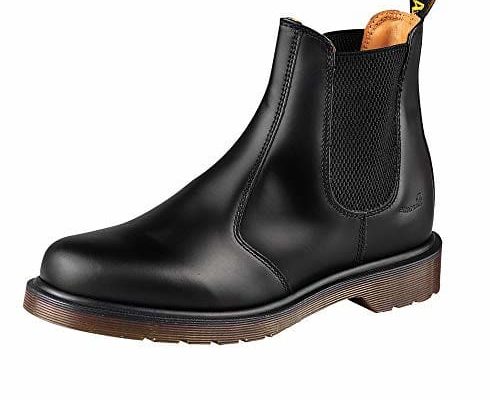
The Blundstone #500 Chelsea Boot, $230, is the pull-on I sold most. It’s water-resistant leather with elastic gussets on a shock-absorbing sole, on in five seconds and comfortable for a full day from the first wear. It’s a great first Chelsea for a lot of men, and the one I’d hand anyone who walks in rain.
Both of its limitations are about the long term. There are no laces to tune the fit, so narrow heels may slip, and the #500’s heel cup is generous. If you have narrow heels and low-volume feet, you’ll probably feel lift even in the right length. The usual fix is a half size down plus a thin insole, which fills the volume and pushes your heel up into the cup.
The other limitation is the sole. The injected sole can’t be resoled the traditional way, so when it wears through, after two to five years of regular wear depending on how much you walk, the boot is mostly done. I think that’s a fair trade at $230. You get a weatherproof boot with no break-in for about the price of a resole and a half on a welted one. Just size it carefully, and test it on a hard floor.
Wear them with a short hem
Fit at the ankle also decides how the boots look. A Chelsea looks best when the trouser hem sits on top of the boot with a slight break or none at all. A full break bunches over the elastic and hides the clean line that’s the whole point of the boot. My preference is a slight break, and the trouser break guide explains how to ask a tailor for one.
With chinos, a slim taper that finishes around 7 inches at the hem keeps the leg from swallowing the shaft. Getting chinos that fit through the seat and taper is worth the trip to the tailor, and it costs less than the boots.
A dark brown Chelsea with dark denim and a crewneck knit is my default for a first-date outfit. It looks deliberate without looking like you spent the afternoon on it.
If you’re still deciding whether a Chelsea or a lace-up should be your first real pair of boots, think about your heel before anything else. Narrow heels make lace-ups the easier buy. Average or wide heels make a Chelsea easy. There are more footwear guides on sizing and break-in for the rest of your feet’s complaints.
The verdict: Buy a Chelsea that’s snug across the instep, has half an inch of toe room, and lifts no more than a quarter inch at the heel when you walk on a hard floor. If it slips more than that, go down a half size before you reach for heel grips. For a first pair, try the Blundstone #500 at $230, sized carefully, with a thin insole if your heels are narrow.
In this story
How we make money: some links below are affiliate links. If you buy through them, Via may earn a commission. It never changes the price you pay, and it never decides what we recommend. Full disclosure.
Mid · $100–$299
Blundstone #500 Chelsea Boot
A water-resistant leather pull-on boot with elastic gussets and a shock-absorbing sole; on in five seconds, comfortable for a full day.
Won't do: There are no laces to tune the fit, so narrow heels may slip, and the injected sole can't be resoled the traditional way.
Next stops
All Footwear guides
Your First Real Pair of Boots: Five Questions Before You Buy
Before you spend $160 or $370 on boots, answer five blunt questions about weather, wardrobe, sizing and upkeep, and the right pair picks itself.
Marcus Hale 6 min

Why You're a 10 in One Brand and a 9.5 in Another
The number on the box is one factory's guess about your foot. Measure once, learn how lasts and shoe types run, and you'll stop returning pairs.
Marcus Hale 6 min
When to Resole: Reading the Wear on Your Soles
Your soles keep a record of every mile. Learn to read it, and you'll resole at the right moment instead of paying to rebuild a ruined shoe.
Walt Brennan 8 min