Stop 02 · Care & Repair Care Basics
Cream, Wax, or Conditioner: What Each One Actually Does
Three tins, three different jobs. Use them in the right order and your leather stays supple and protected; mix them up and you build a mess.
By Walt Brennan, Care & Repair Editor
· 5 min read · 1,204 words
The question I hear most at the bench has nothing to do with resoling. It’s which tin goes first. A man sets a shoebox on the counter with a tin of black wax gone hard and cracked, a bottle of liquid that promises to do everything, and a brush with half its bristles missing. He wants to know why his shoes look either dull or caked.
If you’re weighing shoe cream vs wax, the answer is that you need both, plus a conditioner, because they do different jobs. Conditioner feeds the leather and keeps it flexible. Cream puts color back and gives a soft glow. Wax sits on top, sheds water, and builds a hard shine. Use them in that order, and keep wax off the creases.
Once that sinks in, the drawer stops being a mystery.
Conditioner keeps the leather alive
Leather is skin. It was tanned so it wouldn’t rot, but its fibers still need oil to stay flexible. When those oils dry out, from heat, from road salt, from plain age, the leather stiffens, the creases sharpen, and eventually it cracks along the flex point. You can’t undo a crack. You can only prevent one.
Conditioner puts oil and moisture back into the fibers. It goes on thin, soaks in, and leaves the surface looking a little richer but not shiny. Most conditioners also clean, lifting dirt and old polish so the next layer sits on fresh leather instead of last month’s buildup.
The one I keep on my bench is Saphir Médaille d’Or Renovateur, at $30 for a 2.5-ounce (75 ml) tin. It’s a mink-oil-based cleaner and conditioner that lifts old polish and puts moisture back into smooth leather in one pass. I use a dab the size of a pea per shoe, rubbed in with a cotton cloth in small circles, and the leather takes it up like a dry sponge. That tin lasts most men a year or more.
Be clear on what it won’t do. Renovateur adds no color and no shine, so you still need cream or wax afterward. And it’s not for suede or nubuck; it’ll mat the nap and darken it in patches. Suede is tougher than you think, but it wants a brush and an eraser, not oil.
You can tell leather needs conditioning by the creases across the vamp. On healthy leather they’re the same color as the rest of the shoe and feel soft when you pinch them. On thirsty leather they go pale and a little chalky, and the surface feels papery under your fingertip. Dry leather also drinks cream so fast it never comes up to a glow. Winter does this quickest, and conditioner is the last step in getting salt stains out of boots. When I see those signs, the cream goes back in the drawer and the conditioner comes out. Give it twenty minutes, wipe off what’s left, then carry on.
If the creases have gone pale, the leather is thirsty, and no amount of wax will fix that.
Cream puts back the color
Shoe cream is pigment suspended in a soft base of oils and a little wax. It goes on like a lotion and sinks partway into the leather. Its job is to replace color that’s scuffed or faded and to hide small scratches. It gives a low glow rather than a mirror shine, which is what you want on most everyday shoes, and it flexes with the leather, so it doesn’t crack at the creases.
The decision that matters is color. Match the shoe or go one shade lighter. Going darker is a one-way road: deepening a brown takes five minutes, and lightening it again is close to impossible. If you’re unsure, use a neutral cream. The same tin works on a belt cut from similar leather, if you care whether your belt and shoes match.
Work it in with a cloth or a small dauber, into the creases and along the welt. Let it dry ten to fifteen minutes. Then brush hard with horsehair. You’ll hear the sound change as you go, from a soft drag to a dry, quick whisk, and that’s when the excess is off and the glow comes up.
Shoe cream vs wax comes down to where the leather bends
Wax polish is mostly hard wax with a little solvent and pigment. It sits on top of the leather rather than soaking in, which gives it two strengths: it beads water and shrugs off scuffs, and it can be built into a high shine.
It also has a weakness people miss. Wax doesn’t feed leather. Wax and nothing else means a hard coat over leather that’s slowly drying out underneath. And because wax is stiff, on the flex creases it cracks and flakes. I spent most of my twenties shining whole shoes, creases included, and wondering why they looked like old paint by Friday.
Keep wax on the parts that don’t bend: the toe cap and the heel counter. Lay it on in thin layers with a damp cloth, let each one haze, then buff with a drop of water. Five thin coats beat one thick one every time.
Color matters less with wax than with cream, since so little pigment goes on. I keep a neutral tin and a black one and have never felt short. Neutral layered over a brown toe deepens it a shade over a few months, which I happen to like. If you don’t, buy the matching color and stop there.
Four steps, always in this order
Clean and condition first, then cream, then wax. How often depends on how hard you wear the shoes. This is the schedule I keep for a pair in regular rotation.
| Step | Product | How often | Time it takes |
|---|---|---|---|
| Brush off dust | Horsehair brush | Every wear | 1 minute |
| Clean and condition | Renovateur or similar | Every 6–8 wears | 5 minutes |
| Restore color | Cream polish | Every 4–6 weeks | 15 minutes plus drying |
| Protect and shine | Wax polish | As needed, toes and heels | About 5 minutes |
A word on shortcuts. The all-in-one liquid polishes with a sponge on the cap give an instant shine and take no time, but most leave a film that dries the leather and builds into a plastic-looking coat. I’d keep them away from dress shoes entirely. Even on white leather sneakers, a damp cloth and a little cream age better.
Overdoing it is the other mistake. Conditioning every week saturates the leather and leaves it soft and floppy. Do it after a wear, while the leather is warm, then put cedar shoe trees in so it dries in shape. If it looks dry and pale at the creases, condition. Dull but supple means cream. Wax is for water resistance or a shine on the toe. The rest of the bench routine lives in our care and repair section.
The verdict: Buy three products, not one: a conditioner, a cream that matches your shoe, and a wax in neutral or the same color. Start with Saphir Renovateur at $30 to clean and feed smooth leather every six to eight wears, follow with cream every month or so, and save wax for toe caps and heels, never the creases.
In this story
How we make money: some links below are affiliate links. If you buy through them, Via may earn a commission. It never changes the price you pay, and it never decides what we recommend. Full disclosure.
Entry · under $100
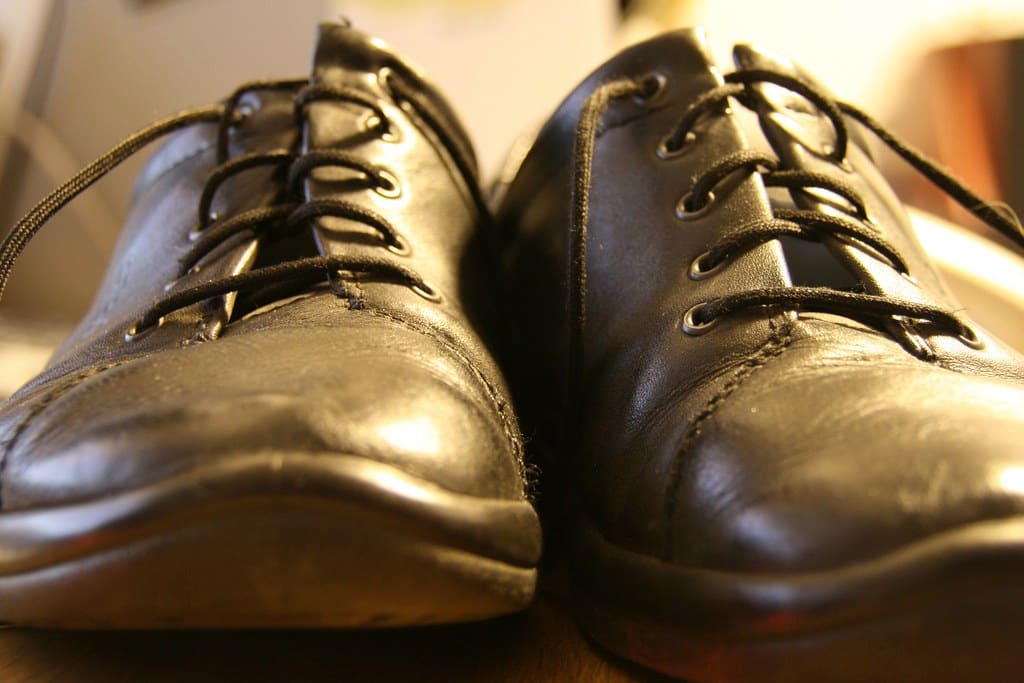
Saphir Médaille d'Or Renovateur (75 ml)
A mink-oil-based cleaner and conditioner that lifts old polish and puts moisture back into smooth leather in one pass.
Won't do: It adds no color and no shine, so you still need cream or wax afterward, and it is not for suede or nubuck.
Next stops
All Care & Repair guides
Cedar Shoe Trees: The Cheapest Insurance You'll Buy
Thirty dollars of unfinished cedar will add years to a pair of good shoes. Why it works, how to fit it, and where it falls short.
Walt Brennan 7 min

Getting Salt Stains Out of Leather Boots
Those white tide lines do more than look bad. Salt pulls the oil out of leather and cracks it at the creases. Vinegar, patience, and conditioner fix it.
Walt Brennan 8 min
Raw Denim, Year One: What Actually Happens
A month-by-month account of breaking in one pair of raw jeans: the stiffness, the crocking, the first soak, and when fades actually show up.
Danny Reyes 6 min