Stop 02 · Care & Repair Winter Repair
Getting Salt Stains Out of Leather Boots
Those white tide lines do more than look bad. Salt pulls the oil out of leather and cracks it at the creases. Vinegar, patience, and conditioner fix it.
By Walt Brennan, Care & Repair Editor
· 8 min read · 1,678 words

The first winter I owned a real pair of boots, I ruined the left one with a hair dryer. There was a white salt line across the toe, I scrubbed it with hot water, and then I got impatient and blasted it dry. By morning the line was gone. So was the softness. The leather across the flex had gone stiff as a cracker, and by March it had split.
My father didn’t say much when I brought it to his counter. He didn’t need to.
If you want to remove salt stains from leather boots without repeating my mistake, the method is plain. Brush off the dry salt, wipe the whole stained panel with one part white vinegar to two parts lukewarm water, and let the boots dry for 24 hours at room temperature, away from heat. Then condition the leather to put back the oil the salt pulled out. Do it within a few days of the stain and you’ll rarely need a second round.
Salt works its way into the fibers
Road salt dissolves into slush, and slush soaks into the lower few inches of a boot. Leather is a mesh of fibers, and the salty water wicks up into it like coffee into a sugar cube. When the water evaporates, the salt stays behind. That white tide line you see is the high-water mark, where the crystals were left stranded at the edge of the wet.
The line itself is cosmetic. The damage happens underneath. Salt crystals draw moisture and oil out of the fibers around them, and the leather stiffens. Most de-icers also contain calcium chloride, which pulls water from the air and stays damp, so the boot never fully dries in the stained area. Then you flex that stiff, dried-out patch a few thousand times on the walk to the train, right where your foot bends, and it cracks.
The stitching suffers too. Salt sits in the welt seam and along the edge of the sole, and over a whole season it weakens the thread. I’ve had boots across my bench where the leather looked fine and the stitches came apart under a fingernail.
So the job has two halves. Get the salt out, then put the oil back. Most people do the first and skip the second, and that’s why the white line keeps coming back looking a little worse each time.
Remove salt stains from leather boots in five steps
This is what I do at the bench, and it works on smooth leather, oiled leather, and most boots you’d wear through a city winter.
- Knock off the loose salt outdoors with a stiff brush, working along the welt where crystals pile up.
- Mix one part white vinegar with two parts lukewarm water, say a quarter cup to a half cup, in a small bowl.
- Dampen a soft cotton cloth, wring it out, and wipe the whole panel from seam to seam, line and all.
- Stuff the boots with newspaper and let them dry for 24 hours at room temperature, 65°F to 75°F, far from any radiator or vent.
- Condition the leather, wait twenty minutes, wipe off the excess, then cream or wax as usual.
Vinegar works because it’s a mild acid, and it loosens the salt residue so the water can carry it out. Plain water alone will shift a fresh stain, but once the crystals have set for a week or two, the vinegar earns its smell. And it does smell, like a pickle jar, for about an hour. It’s gone by morning.
The step people get wrong is the third one. Wipe only the white line and you’ve wetted a new edge, so you get a new tide mark an inch higher. Dampen the whole panel evenly, from the toe seam to the heel, so it dries as one piece. Don’t soak it. The cloth should feel like a wrung-out washcloth, not a dripping sponge.
Drying is where patience pays. Newspaper pulls water from the inside and holds the shape. Change it after a few hours if it’s soggy. Once the boots are dry to the touch, swap the paper for trees. Heat of any kind, from a radiator, a hair dryer, or a boot dryer cranked to high, cooks the fibers. I learned that one the expensive way.
| How bad it is | What to use | Rounds | Total time |
|---|---|---|---|
| Fresh line, same day | Damp cloth, plain water | 1 | 10 minutes plus drying |
| Set line, 1–2 weeks old | Vinegar mix, 1 to 2 | 1–2 | 24–48 hours |
| Heavy crust, whole season | Vinegar mix, condition twice | 2–3 | About 3 days |
| Stiff and cracking at the crease | Take it to a cobbler | n/a | n/a |
Two pairs I’d reach for in a slushy February
Conditioning is the half nobody does, and it’s the half that keeps the leather from cracking. My bench tin is Saphir Médaille d’Or Renovateur, at $30 for 2.5 ounces. It’s a mink-oil-based cleaner and conditioner, and after the vinegar round it does two things at once: it lifts whatever residue is left and puts moisture back into smooth leather in one pass. A pea-sized dab per boot, rubbed in small circles, is plenty. You’ll see the pale, thirsty patch darken back to match the rest of the boot within a few minutes.
Know its limits. Renovateur adds no color and no shine, so you still follow with cream or wax, and if you’re not sure where wax goes and where it doesn’t, that’s worth sorting out before you start layering. It also isn’t for suede or nubuck. On those, use the vinegar mix very sparingly on a cloth, let it dry, and bring the nap up with a suede brush. No oil.
The boot I see most often with salt lines is the Blundstone #500 Chelsea Boot, at $230. It’s water-resistant leather with elastic gussets and a shock-absorbing sole, on in five seconds and comfortable for a full day, which is why so many men live in it from December to March. Its leather takes the vinegar treatment well. Keep the vinegar off the elastic gussets, though. Wipe those with plain water only.
It has two honest limitations. There are no laces to tune the fit, so narrow heels may slip, and how a Chelsea boot should fit is a question to settle before you buy, not after. And the injected sole can’t be resoled the traditional way. That changes the math. On a welted boot, the upper is what you protect so you can resole it later. On a Blundstone the upper and sole wear out together, so a salt-cracked upper ends the boot sooner. All the more reason to clean it on time.
Get the salt out, then put the oil back, or the line comes back worse every time.
Wax before the first snow
The cheapest salt stain is the one that never sets. Before the first storm, I give every pair of winter boots a coat of wax polish over the lower two inches, toe and sides, worked into the welt seam with a small brush. Wax doesn’t stop salt entirely, but it slows the water down long enough for you to get home and wipe it off.
In salt season, renew that coat every two to three weeks. It takes about five minutes a pair. And when you come in from a slushy walk, run a damp cloth around the bottom of the boots before you take your coat off. Thirty seconds then saves you the full vinegar routine later. If you’re dressing for a cold commute, build the cloth into it like your gloves.
Rotation helps more than any product. A boot that gets a full 24 hours to dry between wears doesn’t hold salty water against its fibers overnight. Two pairs worn on alternate days will each look better in March than one pair worn every day. If you’re buying new boots in November, buy the wax the same day and treat them before they see a sidewalk.
I’ll be honest about the spray-on protectors. I’ve used them, and for two or three weeks the slush beads off nicely. After that I can’t tell the treated pair from the untreated one. I keep a can around, but I don’t count on it.
| Habit | Time per pair | Cost per season |
|---|---|---|
| Wipe with damp cloth after wear | 30 seconds | $0 |
| Rewax lower boot every 2–3 weeks | 5 minutes | About $10 in wax |
| Vinegar clean and condition | 20 minutes plus drying | A few cents plus conditioner |
| Leather crack repair at a cobbler | A week in the shop | $25–$60, never invisible |
When it’s past home repair
Not every attempt to remove salt stains from leather boots ends at the kitchen table. If a white line comes back after three rounds of vinegar and conditioner, the salt has worked deep into the welt and cork, and it’ll keep migrating out. If the leather at the flex has gone hard and shows fine surface cracks, conditioner will soften it but won’t close them. And if the stitching along the welt frays when you scratch it, the thread has rotted.
That’s when to take the pair to a cobbler you can trust. A good one can deep-clean the welt, recondition the leather over several days, and restitch a weakened seam. A crack along the crease can be patched or filled for $25 to $60, but it’ll never be invisible, which is why the time to act is before the crack. More of that bench work is covered in our care and repair guides.
The verdict: Wipe your boots with a damp cloth every time you come in from slush, and when a white line sets, clean the whole panel with one part white vinegar to two parts water, dry it 24 hours away from heat, and condition with something like Saphir Renovateur before you cream or wax. Wax the lower two inches before the first snow and every two to three weeks after, and you’ll get through a February without a cracked boot.
In this story
How we make money: some links below are affiliate links. If you buy through them, Via may earn a commission. It never changes the price you pay, and it never decides what we recommend. Full disclosure.
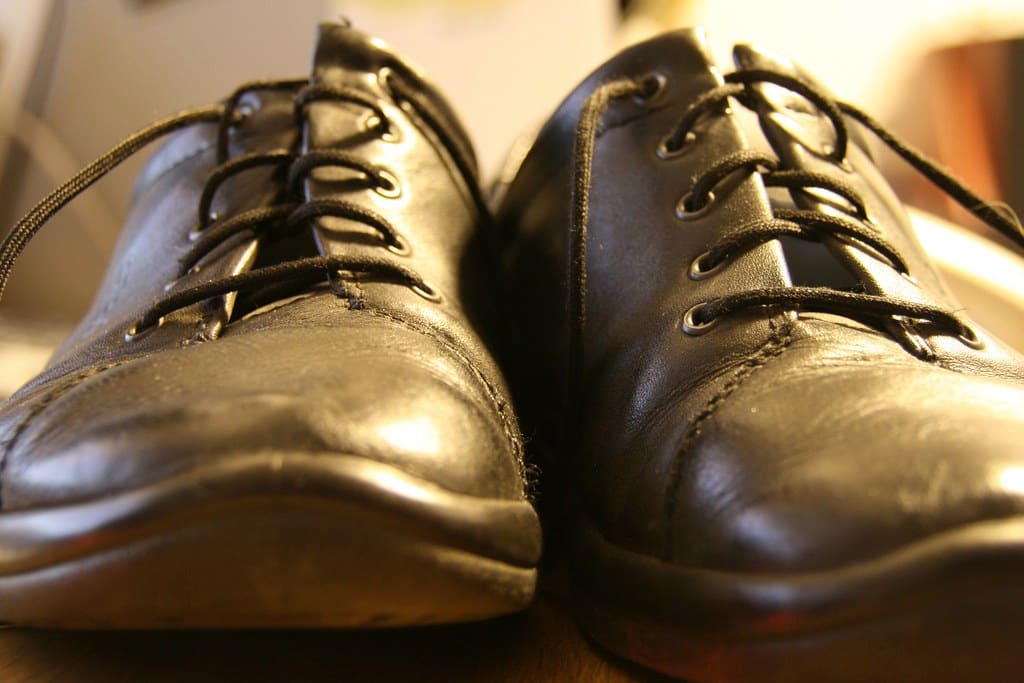
Entry · under $100
Saphir Médaille d'Or Renovateur (75 ml)
A mink-oil-based cleaner and conditioner that lifts old polish and puts moisture back into smooth leather in one pass.
Won't do: It adds no color and no shine, so you still need cream or wax afterward, and it is not for suede or nubuck.
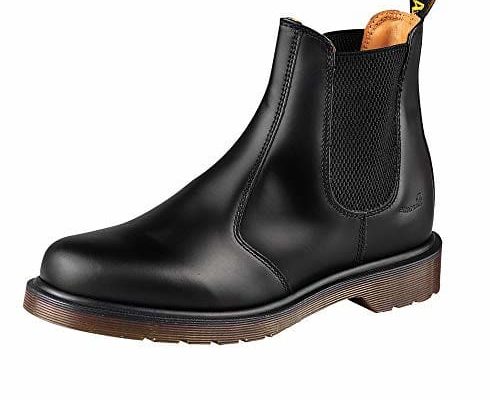
Mid · $100–$299
Blundstone #500 Chelsea Boot
A water-resistant leather pull-on boot with elastic gussets and a shock-absorbing sole; on in five seconds, comfortable for a full day.
Won't do: There are no laces to tune the fit, so narrow heels may slip, and the injected sole can't be resoled the traditional way.
Next stops
All Care & Repair guides
Cream, Wax, or Conditioner: What Each One Actually Does
Three tins, three different jobs. Use them in the right order and your leather stays supple and protected; mix them up and you build a mess.
Walt Brennan 5 min

How to Find a Good Cobbler, and What to Ask
A good cobbler can keep a pair of shoes going for twenty years. How to spot one and put him to the test before your best pair hits the bench.
Walt Brennan 7 min
Raw Denim, Year One: What Actually Happens
A month-by-month account of breaking in one pair of raw jeans: the stiffness, the crocking, the first soak, and when fades actually show up.
Danny Reyes 6 min