Stop 02 · Care & Repair Knit Repair
Pilling, Moths, and Holes: Keeping Knitwear Alive
A good wool sweater can last twenty years. Most don't make it to five, and the reasons are small, fixable habits in the wash and the closet.
By Walt Brennan, Care & Repair Editor
· 7 min read · 1,527 words
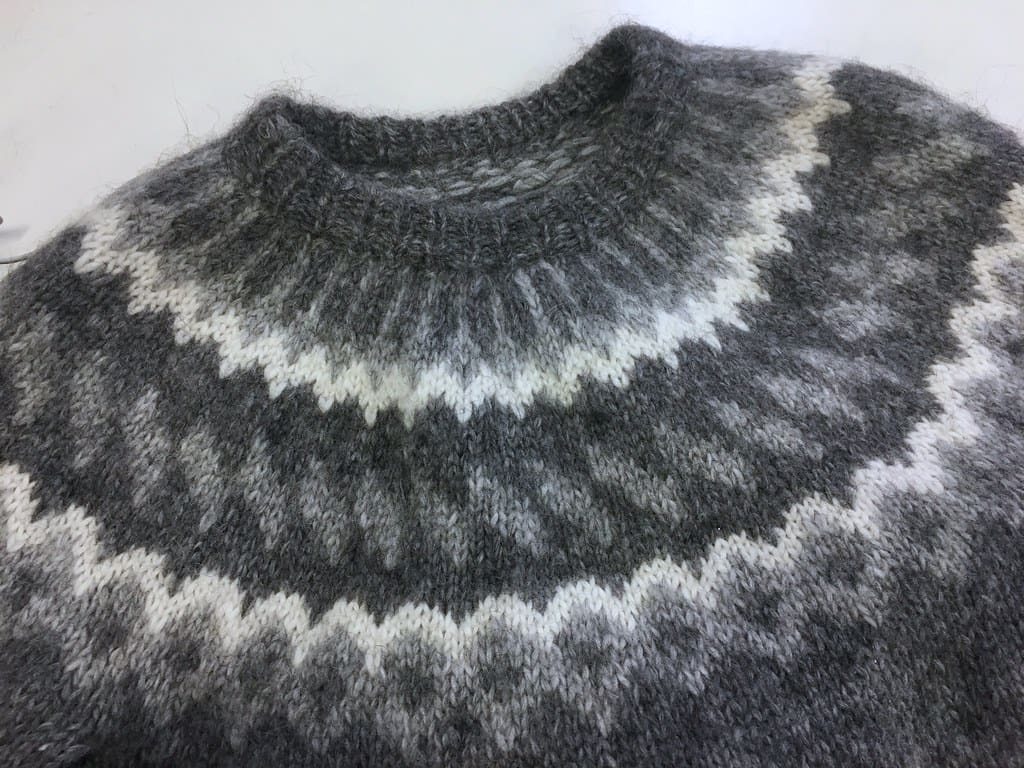
A good wool sweater should outlast your car. The yarn is tough, and a well-made crewneck has nothing in it that wears out on a schedule. Yet most men retire their sweaters after three or four winters, and almost never because the wool gave up. They felt them in a hot wash, hang them until the shoulders grow points, or fold them away dirty for a summer of moth larvae.
Good wool sweater care is mostly about doing less, and doing it at the right time. Air it out between wears and wash it by hand in lukewarm water only every five to ten wears. Dry it flat, store it folded and clean in a sealed bin, comb off pills when they show, and darn any hole while it’s still smaller than a pea. That’s the whole routine. The rest is detail.
I came to knitwear late. Leather was the family trade, and for years I treated sweaters like something you bought again. A gray lambswool crew, worn for fifteen winters as the middle piece whenever I’m layering for fall weather, changed my mind. It has two darns at the elbow and one at the cuff, and it’s better than anything I could replace it with today.
Pilling is friction, and it slows down
Pills are little balls of fiber that have worked loose from the yarn and tangled together on the surface. They form wherever the knit rubs against something: under the arms, along the cuffs, across the stomach where a desk edge sits, and on the shoulder where a bag strap rides. Every sweater pills some. How much depends on the fiber and how tightly it’s spun.
The good news is that pilling usually slows down. A well-made sweater sheds its shortest, loosest fibers over the first ten or fifteen wears, and after a couple of combings there’s less left to work free. A sweater that’s still pilling hard after a full season is telling you something about the yarn, and no amount of care will fix that.
Take pills off with a sweater comb, which runs $10 to $15, or a battery fabric shaver at $15 to $25. Lay the sweater flat on a table, hold the knit taut with one hand, and work in short, light strokes in one direction. I prefer the comb on fine knits because I can feel exactly how much it’s catching. I’ll admit to once using a disposable razor on a merino V-neck, in a hurry before a dinner. It took the pills off fine. It also took a dime-sized patch of the sweater with them.
| Fiber | Pilling | Wash every | Moth risk |
|---|---|---|---|
| Lambswool | Moderate, settles down | 5–10 wears | High |
| Merino | Low to moderate | 4–8 wears | High |
| Cashmere | High at first | 5–10 wears | Highest |
| Cotton | Low | 3–5 wears | None |
| Wool-acrylic blend | High, keeps going | 3–5 wears | Low |
That last row is why I steer people away from blends sold as easy care. The acrylic fibers are stronger than the wool around them, so the pills don’t break off. They just sit there.
Wool sweater care starts with washing less
Wool resists odor better than almost any fabric you own. After a day’s wear, drape the sweater over a chair back for 24 hours and most of the smell is gone. A cotton shirt underneath does a lot of the work here too, and an oxford cloth button-down or a tee keeps the sweat and body oil off the wool. Wash when it’s visibly dirty or every five to ten wears, whichever comes first. For most men that’s three or four times a winter.
When you do wash, do it by hand. Fill a basin with lukewarm water, no warmer than 85°F, and stir in about a teaspoon of wool wash or mild shampoo. Push the sweater under, let it soak ten minutes, and squeeze it gently a few times. Don’t rub it or wring it. Felting happens when wool fibers get heat, soap, and agitation all at once, and you only need two of the three to shrink a size.
Rinse in water the same temperature as the wash. A jump from warm to cold shocks the fibers and tightens them. Then press out what water you can, lay the sweater on a dry bath towel, roll it up like a sleeping bag, and kneel on the roll. Unroll, lay it flat on a fresh towel or a drying rack, and pat it back to shape. I measure the body length and sleeve before washing so I can match them after. Wet wool on a hanger will stretch two or three inches, and it doesn’t come back.
Wool wants air more often than it wants water.
Moths prefer your dirty sweaters
Clothes moths don’t eat the sweater you wore yesterday on a hanger in a lit room. The damage comes from larvae, and the larvae want keratin, the protein in wool, along with the sweat, skin oils, and food spills that make it richer. They also want dark, undisturbed places. A drawer of sweaters you haven’t touched since March is a buffet.
The signs are small, irregular holes, usually several close together, plus faint silky webbing or tiny cases in the seams and folds. If you see one adult moth fluttering in a closet, assume there are larvae somewhere. Adults barely eat. They’re just looking for a place to lay eggs.
The part of wool sweater care most people skip is storage. Store sweaters clean, because a single wear’s worth of sweat is enough to draw larvae. Put them away folded in airtight bins or heavy zip bags. Cedar blocks and lavender sachets help keep adults away, but they don’t kill larvae, and the scent fades fast. Sand your cedar every few months, the same way you’d refresh the wood in your shoe trees, and don’t count on it alone.
| Measure | Cost | How well it works |
|---|---|---|
| Wash before storing | A few cents | Very well |
| Airtight bins or zip bags | $10–$25 per bin | Very well |
| Cedar blocks, sanded | $10–$20 a set | Repels adults, weakly |
| Monthly shake-out of stored knits | 10 minutes | Well |
| Freeze an infested piece | Free | Kills eggs and larvae |
If you do find larvae, seal the sweater in a zip bag and put it in the freezer for a week at 0°F. Let it thaw, brush it outside, then wash it. Vacuum the drawer or shelf, especially the corners.
Darn it while it’s small
A hole the size of a pea is a ten-minute job. Leave it a month and it can run down a sleeve, and then you’re paying a reweaver $30 to $80 for a small patch, more for anything that has to disappear completely. So keep a darning kit where you can find it. Mine is a wooden darning mushroom, a blunt yarn needle with a big eye, and a few cards of wool in the colors I wear most.
Stretch the hole over the mushroom so the knit is flat but not pulled. Run a ring of small running stitches around it about a quarter inch out, into sound fabric. Then lay parallel threads across the hole in one direction, and weave across them in the other, over and under, like the bottom of a cane chair. Don’t pull tight. The darn should sit flush, not pucker.
My darns aren’t invisible, and I’ve stopped trying. On a gray crewneck a slightly different gray at the elbow looks like what it is, a sweater someone kept. If you’d rather nobody notice, use yarn pulled from an inside seam allowance, or pay the reweaver.
Fold it, then leave it alone
Hangers ruin knitwear more slowly than moths, but just as surely. The weight of a sweater pulls on the shoulders until they stretch and pucker over the hanger ends. Unlike hanging a suit jacket, where a wide wooden hanger is the right call, a sweater belongs on a shelf. Fold it in thirds lengthwise with the sleeves tucked in, then once across, and stack heavy knits at the bottom.
You also need fewer than you think. Three or four good sweaters in rotation, each worn once or twice a week, last far longer than one worn daily, and the math on how few pieces you can get away with tends to favor quality here. Wool you own fewer of gets handled with more care. A fine merino and a heavy lambswool between them cover most of a winter.
Come spring, wash everything once, let it dry fully, and pack it away with sanded cedar in sealed bins. Pull the bins out once in midsummer, shake each sweater out in daylight, and close them again. The rest of the bench is covered in our care and repair guides.
The verdict: Wash wool sweaters by hand in water no warmer than 85°F every five to ten wears, dry them flat, and store them folded and clean in sealed bins with cedar you sand every few months. Buy a $10 comb and a darning mushroom now, fix pills and pea-sized holes the week you see them, and skip wool-acrylic blends, which pill for as long as you own them.
Next stops
All Care & Repair guides
Cedar Shoe Trees: The Cheapest Insurance You'll Buy
Thirty dollars of unfinished cedar will add years to a pair of good shoes. Why it works, how to fit it, and where it falls short.
Walt Brennan 7 min

Storing and Pressing a Suit Between Wears
A suit wears out faster at the dry cleaner than on your back. A wide hanger, a soft brush, and a steamer will keep it sharp for years.
Walt Brennan 6 min

The Oxford Cloth Button-Down Is Still Undefeated
One shirt works with raw denim, chinos, a sport coat, and boots without changing anything. Why the OCBD keeps winning, and how to buy a good one.
Danny Reyes 9 min