Stop 03 · Everyday Outfit Math
Building a Weekend Uniform You Won't Get Tired Of
Fix the formula, rotate the parts: a two-shoe weekend uniform that survives a year of Saturdays without turning into the same photo every week.
By Danny Reyes, Everyday Editor
· 7 min read · 1,572 words
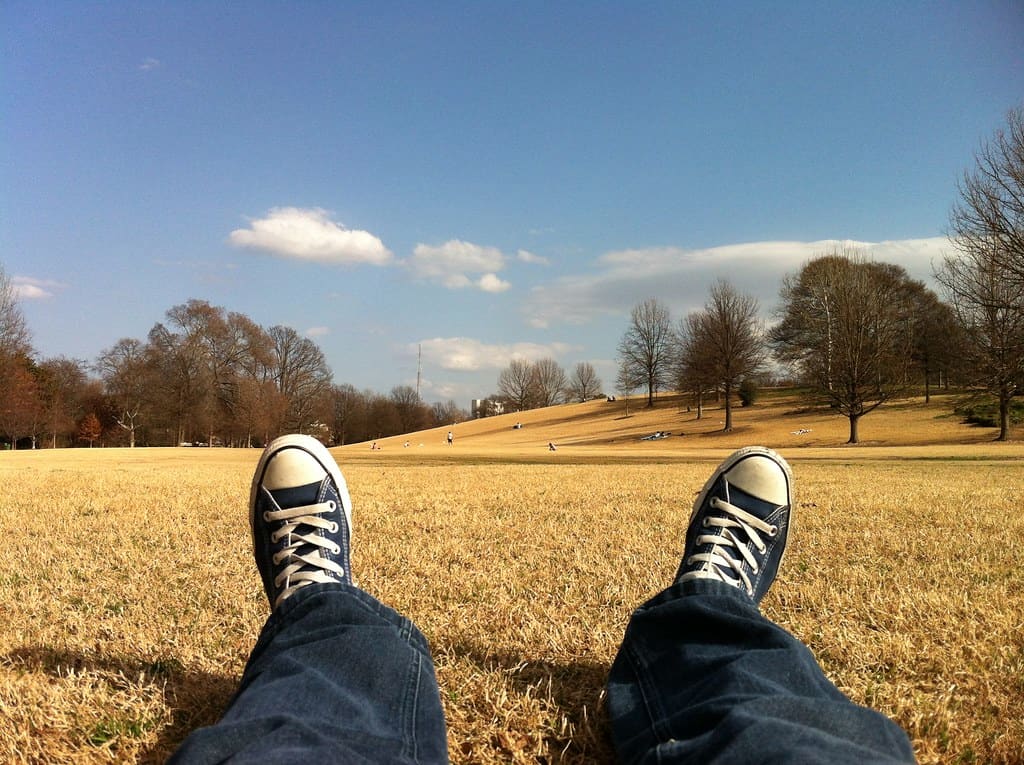
For about two years my weekend outfit was whatever I’d worn on Friday, minus the belt. I didn’t notice until I sorted my wardrobe spreadsheet by day of the week and found that Saturdays had the most variety and the lowest scores. (Yes, I score outfits. Out of five. Saturdays averaged a 2.4.) I was improvising every weekend and getting it wrong most of the time.
What fixed it was a uniform. The way to build casual weekend outfits you won’t get tired of is to lock the formula and rotate the parts: one or two shoes, two trouser options, a handful of tops in colors that all work together, and one layer. A uniform goes stale when it’s a single exact outfit. It stays good when it’s one shape with eight or ten interchangeable pieces.
Two shoes cover most Saturdays
Every outfit on this site starts at the feet, and on weekends that’s even more true, because the shoe decides what you can do. Mine is a two-shoe system with a boot that comes in for winter.
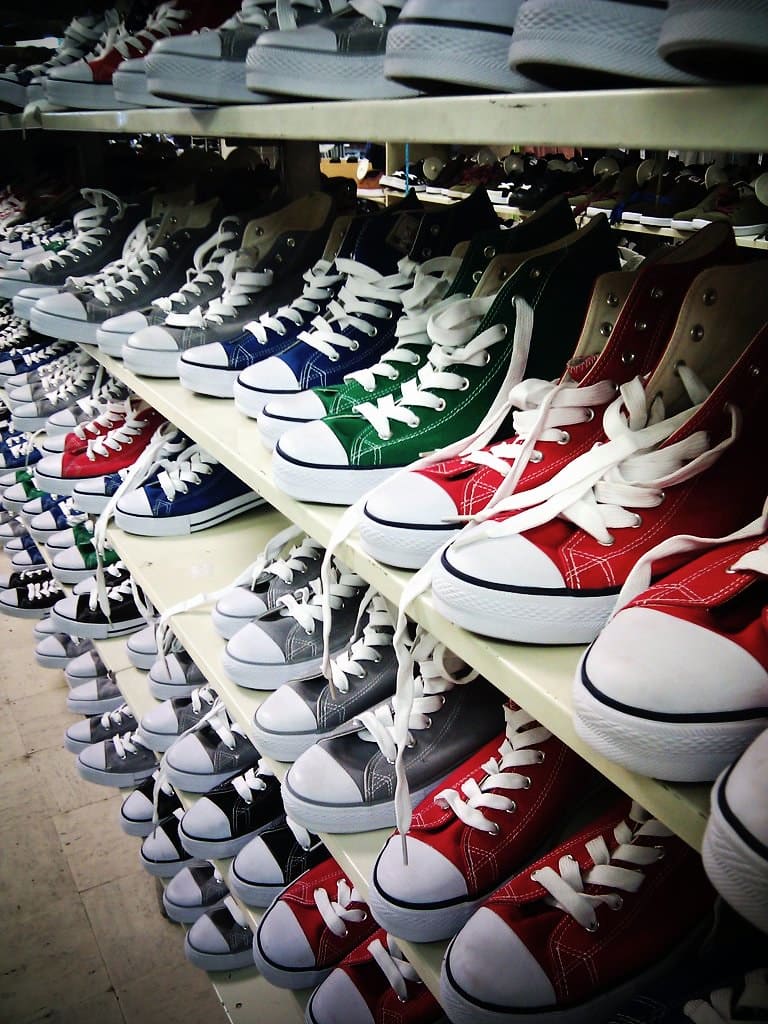
The first is the Converse Chuck 70 Hi, which costs $90. It uses heavier canvas than the standard Chuck, with a taller rubber foxing and a cushier insole, and it goes with jeans, chinos, and shorts without any thought at all. It costs less than a nice dinner, and mine have about 60 weekend wears a year on them. The limits are real, though. There’s almost no arch support, so a long day at a street fair or a museum leaves my feet sore by 4 p.m. And the canvas soaks through in the first real rain. I check the forecast before I put them on, which is more planning than a $90 sneaker should require.
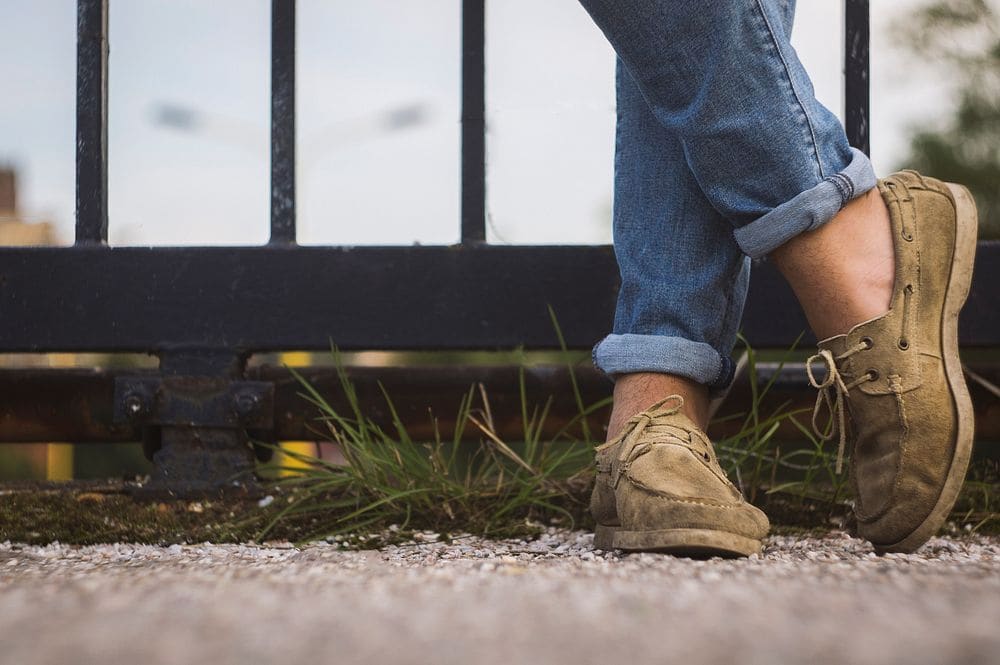
The second is the Sperry Authentic Original boat shoe, $100. It’s a hand-sewn moccasin with rawhide laces and a siped, non-marking sole, and from June to August it’s the default with shorts and anything linen. I wear it barefoot or with a no-show sock, and the sock matters more than you’d think; the right sock fiber for summer keeps the leather from smelling like a gym bag by July. Its limits: the cushioning is thin, so it’s a poor choice for a long city walk, and it looks out of place with anything heavier than chinos. Boat shoes with raw denim look like a costume change interrupted halfway.
That’s the honest trade-off of a two-shoe system. Neither shoe is great for six hours on your feet. I accept that, because I’m not on my feet for six hours most Saturdays, and when I am, I plan for it.
Fix the formula, rotate the parts
My weekend formula is a shoe, a trouser, a top, and one optional layer. That’s it. What changes across the year is which version of each slot I reach for.
The usual argument for uniforms leans on decision fatigue. I’m honestly not sure I buy it; picking a shirt on a Saturday isn’t hard. What I do buy is that a fixed formula lets you spend money in fewer places and get better at each one. Owning one pair of weekend jeans means I know exactly how they fit, how they’ve aged, and what they go with.
| Season | Shoe | Bottom | Top |
|---|---|---|---|
| Spring | Chuck 70 Hi | Chinos | Oxford shirt or tee |
| Summer | Boat shoe | Shorts, light chinos | White tee |
| Fall | Chuck 70 Hi | Raw denim | Tee under a sweater |
| Winter | Lace-up boots | Raw denim | Flannel or sweater |
The top slot is where most of the wearing happens, and it’s also where I spend the least. Three good white tees carry the summer. A heavyweight white tee bought by fabric weight holds its collar through a season of washing, which is the whole job. Add one or two oxford shirts and a gray crewneck, and the top slot is done.
The bottom slot is even simpler. One pair of dark jeans does most of the year. Mine are the pair I’ve worn for three years, and how raw denim changes in year one is mostly a story about weekends. Add one pair of chinos in olive or khaki, and one pair of shorts with a 7-inch inseam for summer, and you’re covered.
The layer is a chore coat or a sweater, depending on the month. One of each.
Get the hem right once and forget it
A uniform only works if every bottom goes with every shoe in the same season, and the place it breaks is the hem. High-tops are fussy. Jeans that stack two or three times over a Chuck 70 Hi hide the shoe and make your legs look shorter than they are. I cuff mine once at about 1.5 inches so the hem sits right at the top of the canvas, and I keep the leg opening around 7.5 inches so it doesn’t swallow the shoe.
Chinos are easier with a low shoe. With the boat shoe I want no break at all, the hem just touching the top of the moccasin, or a single roll that shows an inch of ankle in July. The same rules apply to low sneakers, and getting the hem right with sneakers goes through them inch by inch. Shorts are the one place I’m strict. A 7-inch inseam on me (I’m 5’10”) ends a couple of inches above the knee, which looks deliberate. A 9-inch inseam with boat shoes looks like you got lost on the way to a regatta.
Once the hems are set, you never think about them again, which is the point of a uniform.
Nobody notices you wore the same thing last Saturday, and the ones who do are wearing the same thing too.
Casual weekend outfits get boring in the colors
When a uniform starts to feel stale, it’s rarely the shape. It’s that everything is the same color at the same weight. My first attempt was navy everything, and by October I felt like a parking attendant.
The fix is a narrow palette with real texture. Pick three base colors that all go together (mine are indigo, olive, and gray), plus white. Then vary the surface: a smooth tee one week, a slubby one the next, a waffle-knit henley, a rough wool sweater, a corduroy overshirt in fall. The outfit stays the same shape while it looks different from across a room. Olive is the color I resisted longest and now wear the most; it goes with indigo, gray, white, and both shoes.
I’d skip graphic tees and loud prints for the core rotation. Not because they’re wrong, but because a graphic tee is memorable, and a uniform works by not being memorable. Keep one or two for fun. They just don’t count toward the system.
Count the wears before you buy anything
Here’s the rule that keeps my weekend closet small: a new piece has to work with at least three outfits I already wear, or it doesn’t come home. I check it against the spreadsheet before checkout, which my wife finds both reassuring and a little alarming.
There are 104 weekend days in a year. With a two-shoe system and boots in winter, the math on cost per wear looks like this for my own rotation.
| Piece | Price | Weekend wears a year | Cost per wear, year one |
|---|---|---|---|
| Chuck 70 Hi | $90 | 60 | $1.50 |
| Boat shoe | $100 | 25 | $4.00 |
| Raw jeans | $200 | 70 | $2.86 |
| Three white tees | $90 | 75 | $1.20 |
The boat shoe is the expensive one per wear, and that’s fine. It does a job nothing else in the rotation does. What I’d question is anything that would land above $10 a wear in year one, which is where most impulse purchases end up. I own a pair of suede loafers with exactly three weekend wears on them. That’s $50 a wear and counting.
The small stuff keeps it from going stale
If the core never changes, the accessories are where the variety lives. A canvas strap on a watch in summer and a leather one in fall. A cap in a color outside the palette. A good pair of sunglasses that actually fits your face, which matters more than the brand; checking bridge and lens width takes two minutes and saves you a summer of sliding frames.
Socks are the other lever. A pair of rust or forest-green socks peeking over a Chuck 70 does more to change an outfit than a new shirt. They’re also the cheapest thing in the closet.
I’ll admit there are weekends I break the uniform entirely: a wedding, a hike, the one Saturday a year I wear a bright Hawaiian shirt to a friend’s barbecue because he insists. The uniform isn’t a vow. It’s a default, and the point of a default is that you stop deciding. For more on building the weekday side the same way, start in the everyday section.
The verdict: Build casual weekend outfits on a fixed formula: Converse Chuck 70 Hi ($90) for spring and fall, a Sperry Authentic Original ($100) for summer with shorts or chinos only, and boots in winter, over one pair of dark jeans, one pair of chinos, and one pair of shorts, with three white tees, two oxford shirts, and a gray sweater on top. Keep the palette to indigo, olive, gray, and white, vary the textures, and don’t buy anything that doesn’t fit at least three outfits you already wear.
In this story
How we make money: some links below are affiliate links. If you buy through them, Via may earn a commission. It never changes the price you pay, and it never decides what we recommend. Full disclosure.
Entry · under $100
Converse Chuck 70 Hi
Heavier canvas, a taller rubber foxing, and a cushier insole than the standard Chuck; a weekend shoe that costs less than a nice dinner.
Won't do: Almost no arch support for long days on your feet, and the canvas soaks through in the first real rain.
Entry · under $100
Sperry Authentic Original Boat Shoe
A hand-sewn moccasin boat shoe with rawhide laces and a siped non-marking sole; the default summer shoe for shorts and linen.
Won't do: Thin cushioning makes it a poor choice for a long city walk, and it looks out of place with anything heavier than chinos.
Next stops
All Everyday guides
Raw Denim, Year One: What Actually Happens
A month-by-month account of breaking in one pair of raw jeans: the stiffness, the crocking, the first soak, and when fades actually show up.
Danny Reyes 6 min
Buying White T-Shirts: Fabric Weight Over Brand
The number that decides whether a white tee lasts a year or goes see-through by June is printed in ounces, and most people never look for it.
Danny Reyes 4 min
Socks Matter More Than You Think: A Guide by Fiber
A sock is the layer between your foot and a $400 shoe. Read the fiber label first, and you'll buy fewer pairs that last much longer.
Theo Lindqvist 6 min